
What a Technician Sees on a Winter Call
By late fall, a lot of our service calls start the same way: a homeowner says the door was fine all summer and now it's grinding, sticking halfway up, or refusing to close all the way. Usually it's not one big failure, it's a handful of small things that got ignored during the hot, humid months finally catching up once the temperature drops. Rubber seals that baked and cracked in the summer sun shrink further in the cold. Springs that were already a little worn get stiffer and noisier. Moisture that soaked into wood trim around the opening swells, then freezes, and the door starts binding on one side. None of it is dramatic until the morning after an ice storm, when the door won't budge and someone's late for work.
Why Winter Is Hard on Garage Doors Here
Middle Tennessee winters aren't brutal compared to the upper Midwest, but they're inconsistent, and that's actually harder on a garage door system. You get stretches of mild, damp weather followed by sudden cold snaps and the occasional ice storm. That freeze-thaw cycling is rough on metal springs and hardware, and it's rough on any wood or composite trim around the garage that's held onto moisture from the heavy rains and humidity of the previous months. Add in pine debris and sap residue that built up over the fall, and you've got sensors, tracks, and seals that are dirtier and wetter going into winter than most people realize.
A Practical Pre-Winter Checklist
1. Inspect and Replace Weatherstripping
Walk around the bottom seal and side weatherstripping and look for cracking, flattening, or gaps where daylight shows through. Weatherstripping that's been baked all summer is often brittle by October, and brittle rubber tears the first time it gets cold and stiff. A new bottom seal is a cheap fix (typically in the $20 to $60 range for materials) and it's the single best defense against cold air, moisture, and the small critters that like to nest in garages once it drops below freezing.
2. Check Spring Tension Before It's an Emergency
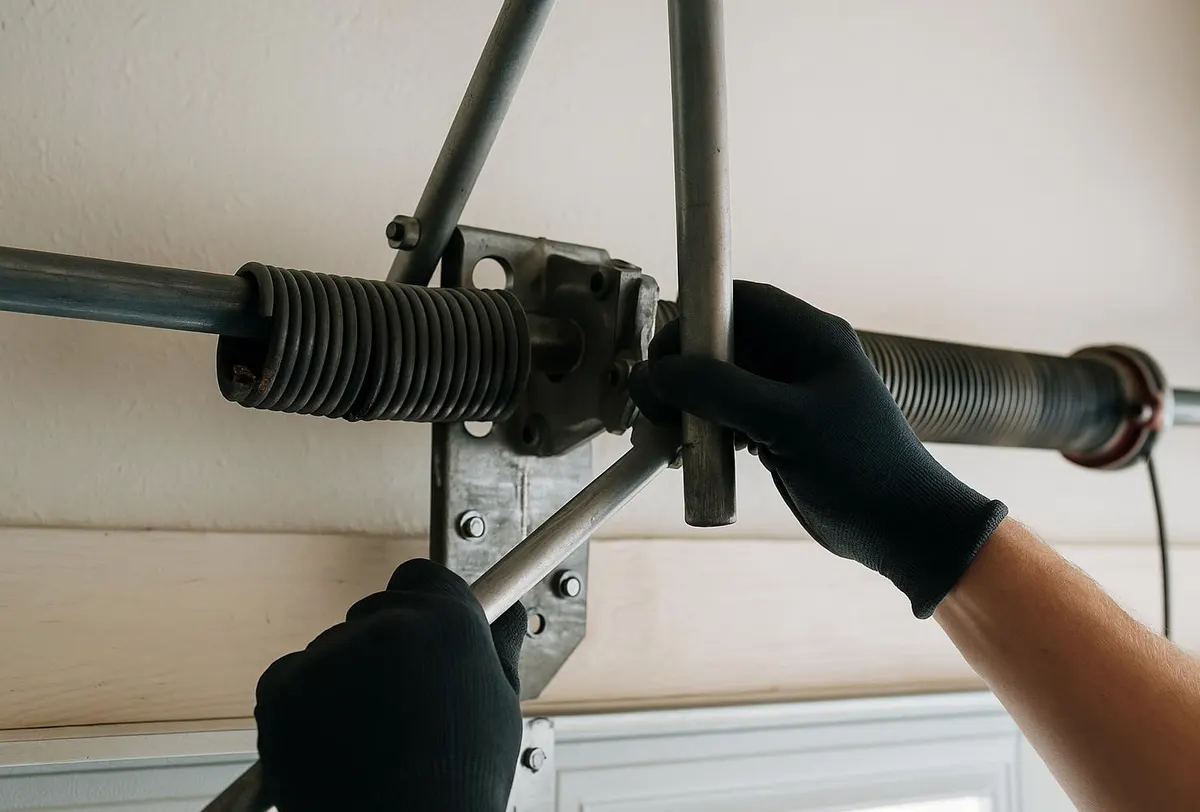
Cold makes steel contract slightly, which means a spring that was marginal in September can feel noticeably weaker or louder in December. Signs to watch for: the door feels heavier than usual when opened manually, it doesn't stay put halfway up, or you hear a sharp bang from the garage (a classic sign of a spring breaking under tension). Springs are under serious load and are not a safe DIY repair. If yours is showing wear, get it looked at before an ice storm has you relying on it twice a day.
3. Lubricate Moving Parts, But Use the Right Product
Rollers, hinges, and the torsion spring itself need lubrication going into winter, but skip anything petroleum-based that'll thicken up in the cold. A silicone-based garage door lubricant stays consistent across temperature swings and won't attract the dust and pine debris that tends to accumulate on garage floors. Avoid WD-40 as a long-term lubricant here, it's a solvent, not a lubricant, and it'll actually strip existing grease.
4. Test the Auto-Reverse Safety Feature
Place a block of wood or a roll of paper towels under the door and close it. The door should reverse the instant it touches the object. Cold weather can affect sensor alignment if the garage has shifted slightly from seasonal humidity swings, and a misaligned sensor is one of the most common issues we find on winter service calls. This is a two-minute test that catches a real safety problem before it matters.
5. Look at the Opener's Battery Backup
If your opener has a battery backup (standard on many newer units), check that it's actually holding a charge. Ice storms in this area sometimes bring down power lines, and a dead backup battery means a manually operated door at the worst possible time. If you don't have battery backup and you've lost power during past storms, it's worth asking about adding one during a maintenance visit.
6. Clear Pine Debris and Check Drainage Around the Opening
Pine needles and sap residue that built up over fall tend to sit right at the base of the door and along the track, holding moisture against the metal. Clear it out and check that water isn't pooling at the threshold, standing water that freezes overnight is a common cause of a door that won't seal properly, or one that ices shut.
When to Call Nashville Garage Door Service
If you've gone through this list and still have a door that's sticking, grinding, or sagging on one side, or if a spring looks stretched, rusted, or visibly uneven compared to its opposite, it's time to call in a technician rather than keep adjusting things yourself. We handle Spring Repair & Replacement for doors showing wear before they fail outright, and our Garage Door Maintenance visits cover a full inspection of springs, cables, rollers, weatherstripping, and sensor alignment in one visit, exactly the kind of tune-up that prevents a 6 a.m. ice-storm surprise. If something does fail during a cold snap and you're stuck with a door that won't open or close, our Emergency Garage Door Service is built for that kind of timing.
Winter in Middle Tennessee doesn't give much warning before the first ice storm rolls in. If your garage door has been acting up or it's just been a while since a real inspection, call Nashville Garage Door Service today, we serve homes and businesses throughout Nashville, Brentwood, Franklin, Hendersonville, Mount Juliet, Murfreesboro, Smyrna, and Gallatin, and we'll get your door ready before the cold sets in for good.